Myopia Management for Children
Slow the progression of nearsightedness and protect your child’s long-term vision.
Myopia is more than needing stronger glasses each year. Early treatment can help reduce the risk of serious eye conditions later in life.
- FDA-authorized treatment options
- Clinically proven results
- Specialized pediatric care

Request a Myopia Consultation
WHAT IS MYOPIA?
Myopia (nearsightedness) is becoming increasingly common in children. Unfortunately, myopia is not just about needing stronger glasses each year—it is a progressive eye condition that can increase the risk of serious eye diseases later in life, including retinal detachment, glaucoma, and myopic macular degeneration.

When should my child start Myopia management?
Children often begin treatment between ages 6 and 12, when myopia typically progresses the fastest.
Signs your child may benefit from treatment:
- Rapidly increasing prescription
- Family history of high myopia
- Difficulty seeing the board at school
- Squinting or sitting close to screens
Because most myopic eye growth occurs between the ages of 6 and 21, we recommend beginning myopia management as early as possible to help slow the progression.
Treatment Options
Stellest® Myopia Control Glasses
Stellest lenses are specifically designed to manage myopia progression in children.
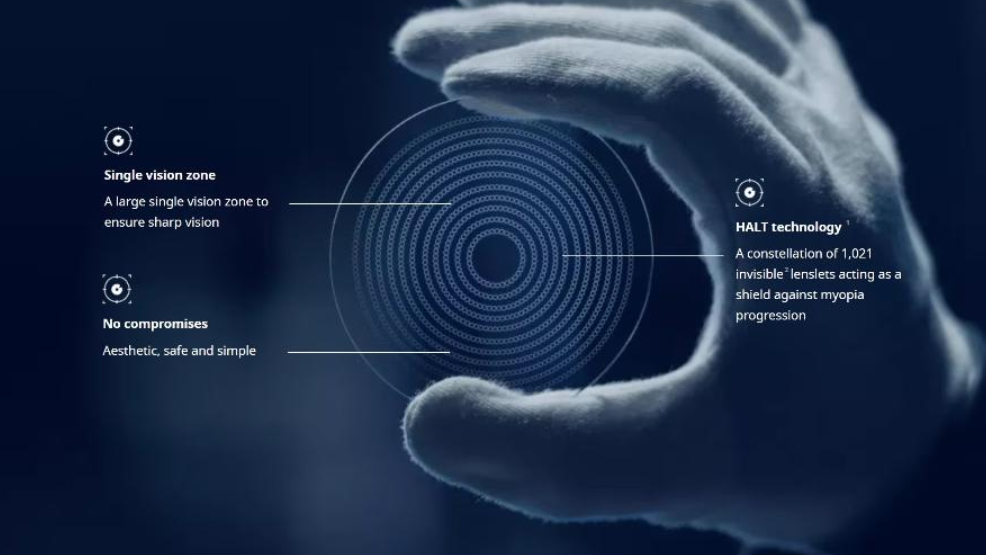
Stellest lenses use advanced technology that incorporates 1,021 highly aspherical lenslets arranged in 11 rings. These lenslets create a controlled “myopic defocus” that helps slow the elongation of the eye. Stellest lenses are FDA authorized for myopia management in children ages 6–12.
Clinical Results
A two-year study showed that Stellest lenses can:
- Slow myopia progression by about 71%
- Reduce eye elongation by about 53% over two years
Benefits of Stellest®
- Works like normal glasses
- Non-invasive and easy to wear
- No contact lens handling required
- Excellent option for younger children
Best for Children Who
- Prefer glasses instead of contacts
- Are new to myopia management
- Are younger or not ready for contact lenses
MiSight® 1-Day Contact Lenses
MiSight 1-Day contact lenses are daily disposable soft contact lenses specifically designed for myopia control in children.
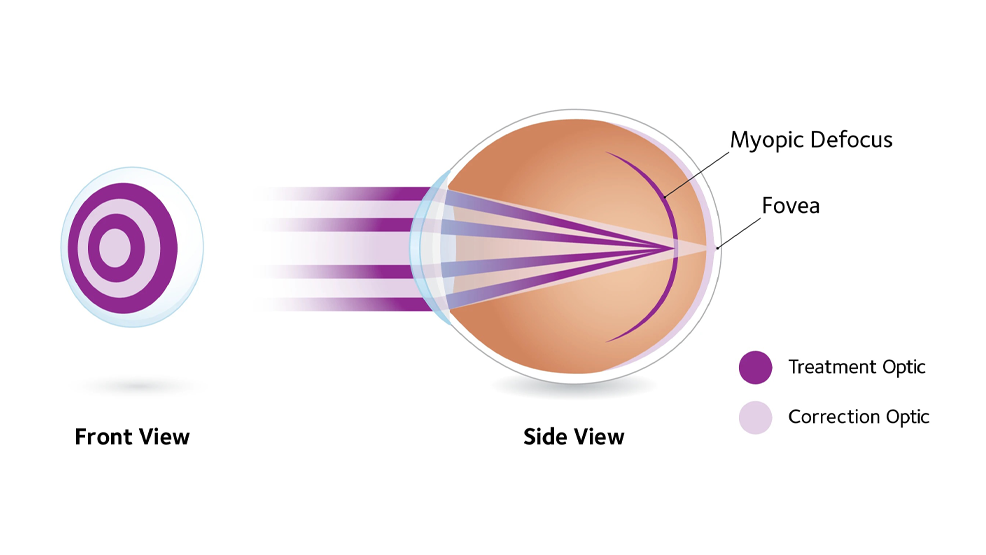
They use a dual-focus optical design that corrects vision while also providing signals that help slow eye growth. This design creates a controlled defocus that helps slow eye elongation. MiSight contact lenses are FDA authorized to slow myopia progression when initially prescribed for children 8–12 years old.
Clinical Results
A 3-year clinical trial showed MiSight lenses can:
- Slow myopia progression by about 59%
- Reduce eye growth by about 52%
Benefits of MiSight®
- Daily disposable (new lens every day)
- Ideal for sports and active kids
Best for Children Who
- Are comfortable with contact lenses
- Play sports frequently
- Want freedom from glasses
Which option is right?
Both treatments are clinically proven to slow myopia progression. Our doctors will help determine the best option based on your child’s needs.
What to Expect
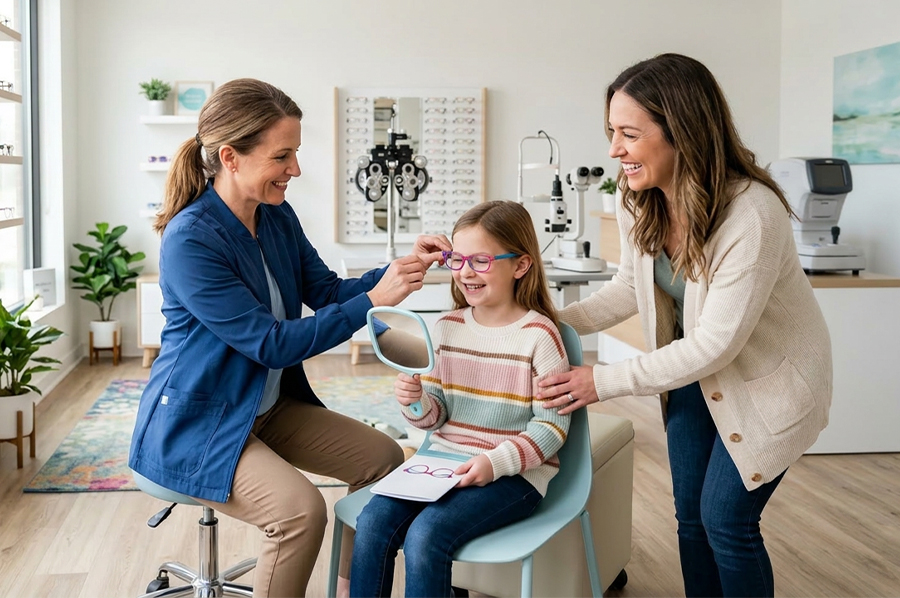
Myopia management involves regular monitoring and adjustments.
Your child’s care typically includes:
- Comprehensive eye examination including baseline prescription and measurements of the length of your child’s eye
- Fitting of Stellest glasses or MiSight lenses
- Follow-up visits every 6–12 months
- Monitoring prescription and eye growth
If your child has been diagnosed with nearsightedness, we recommend scheduling a myopia management consultation to discuss treatment options. In addition to Stellest and MiSight, we also offer low-dose atropine therapy and orthokeratology to provide a comprehensive, personalized approach to myopia management.
Our doctors will determine which option is the best solution for your child.
Why NH Eye Associates
- Experienced pediatric eye care team
- Advanced diagnostic technology
- Personalized treatment plans
- Convenient New Hampshire location
Protect your child’s vision for the future. Early myopia management can make a lasting difference.